PEG-Linker
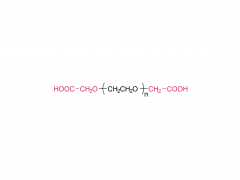
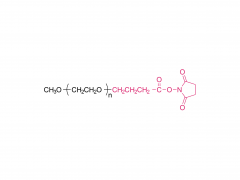
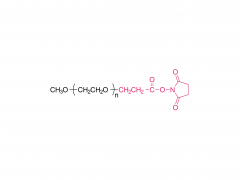
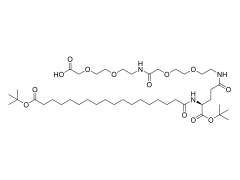
Polyethylenglykol-Linker (PEG-Linker) spielen als „unsichtbare Grundbausteine“ in Radionuklid-Wirkstoff-Konjugaten (RDCs) eine unverzichtbare Rolle. Obwohl sie scheinbar nur Hilfskomponenten sind, beeinflussen sie direkt die Stabilität, die Zielgenauigkeit und den Metabolismus von RDC-Wirkstoffen im Körper. Innerhalb der komplexen Struktur eines RDCs dient der PEG-Linker als wichtige Brücke zwischen dem Zielmolekül (z. B. Antikörper, Peptide) und dem Chelator, der das Radionuklid komplexiert. Seine Eigenschaften sind entscheidend für die Entwicklung eines erfolgreichen RDC-Moleküls.
Erstens können PEG-Linker die physikochemischen Eigenschaften und pharmakokinetischen Profile von RDC-Arzneimitteln deutlich verbessern. PEG-Ketten sind stark hydrophil; ihre Integration in RDC-Moleküle kann die Wasserlöslichkeit des Konjugats effektiv erhöhen. Dies ist besonders wichtig für hydrophobe Peptide oder niedermolekulare Liganden, da es die Aggregation von Wirkstoffmolekülen verhindert und die Biodistribution verbessert. Durch die präzise Kontrolle der PEG-Kettenlänge (z. B. PEG4, PEG8, PEG12) können Forscher zudem die Flexibilität und räumliche Struktur des Linkers feinabstimmen. Dies trägt dazu bei, die sterische Hinderung durch Chelator und Radionuklid auf die Aktivität des Zielmoleküls zu reduzieren und sicherzustellen, dass das Zielmolekül auf Tumorzellen effizient und präzise erkannt und gebunden werden kann.
Zweitens spielen PEG-Linker eine entscheidende Rolle bei der Optimierung der In-vivo-Biodistribution von RDC-Arzneimitteln und der Verbesserung ihres therapeutischen Index. Studien haben gezeigt, dass die PEGylierung die Clearance von RDC-Arzneimitteln aus dem Blut beschleunigen und gleichzeitig deren Aufnahme und Retention im Tumorgewebe erhöhen kann. Dadurch wird ein höheres Verhältnis der absorbierten Radioaktivität zwischen Tumor und gesundem Gewebe (z. B. Niere, Leber, Knochenmark) erreicht, wodurch das therapeutische Fenster effektiv erweitert wird. Beispielsweise entwickelten Wissenschaftler durch die Einführung eines kurzen PEG4-Linkers zwischen einem Antikörper und einem Chelator erfolgreich bivalente DOTA-Radiohaptene (wie „Gemini“). Diese Konstrukte zeigten eine exzellente Tumoraufnahme und -retention in der prätargetierten Radioimmuntherapie bei gleichzeitig schneller renaler Clearance, was eine kurative Tumorbehandlung mit geringerer Radioaktivität ermöglicht. In ähnlicher Weise zeigten in der Forschung zur gezielten Alpha-Therapie bei Prostatakrebs ⁴Ce/²²⁵Ac-Macropa-PEG4-YS5-Konjugate mit einem PEG4-Linker die höchste Tumoraufnahme und die beste Antitumorwirksamkeit im Vergleich zu Analoga ohne PEG oder mit zu langen Linkern.
Schließlich erleichtert die Anwendung von PEG-Linkern auch die Entwicklung neuartiger RDC-Designs und multifunktionaler Plattformen. Beispielsweise können PEG-Linker zur Konstruktion peptidbasierter Multimerisierungsplattformen (wie PEGibodies) verwendet werden. Durch die Bildung von Nanopartikeln erhöhen diese Plattformen die Bindungsaffinität des Liganden zu seinem Rezeptor und verlängern so die Verweildauer des Wirkstoffs in Tumoren signifikant, ohne die Halbwertszeit im Blutkreislauf notwendigerweise zu verlängern. In der Forschung zur zielgerichteten Alpha-Therapie von EpCAM-positiven Tumoren wurde die ortsspezifische Konjugation des Antikörpers HEA125 mithilfe eines Maleimid-PEG4-Linkers erreicht. Das resultierende [²²⁵Ac]Ac-Macropa-PEG4-HEA125-Konjugat zeigte eine hohe Immunreaktivität, exzellente Stabilität in vitro und eine starke Antitumoraktivität in vivo bei minimaler Off-Target-Akkumulation. Diese Beispiele verdeutlichen die entscheidende Rolle von PEG-Linkern für die Weiterentwicklung von RDC-Wirkstoffen hin zu mehr Präzision, Sicherheit und Wirksamkeit.